October 31, 2024
6 Career Paths for Master Estheticians in Utah
Last reviewed: August 2026
If you love skincare, helping clients feel confident, and learning advanced treatment techniques, Master Esthetics can lead to several different professional directions.
But if you are researching esthetics careers in Utah in 2026, there is an important change to understand first.
Utah’s former 600-hour Basic Esthetics licensing pathway changed beginning January 1, 2026. Renaissance Academie (RACE) no longer enrolls new students into that former program.
RACE now focuses its professional skincare education on the 1,200-hour Master Esthetics program, which prepares students for Utah’s Master Esthetician licensing pathway.
Master Esthetics includes foundational skincare plus advanced education in areas such as professional facial treatments, chemical exfoliation, microdermabrasion, dermaplaning, hair removal, body treatments, lash and brow services, advanced equipment and modalities, client consultation, and business development.
What can you do with that education?
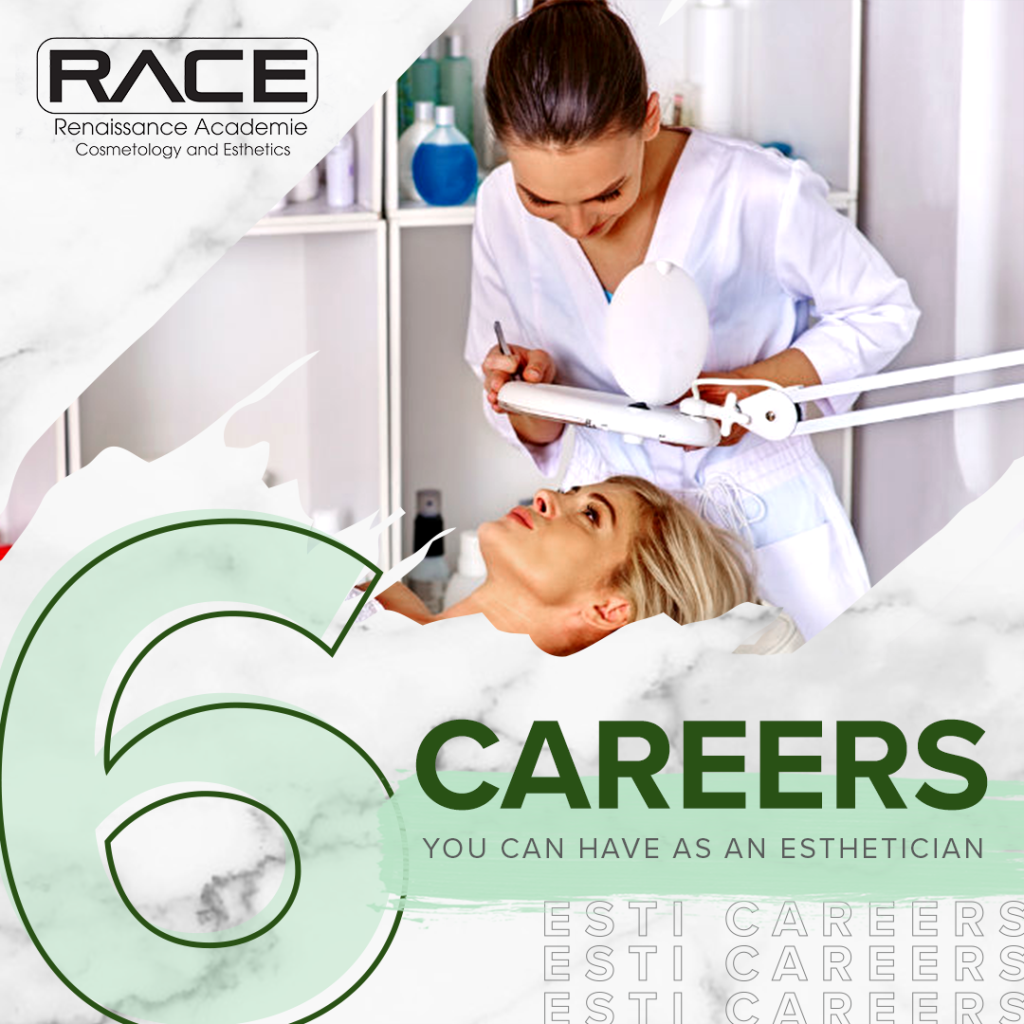
Here are six career paths Master Esthetics graduates may explore.
What Does a Master Esthetician Do?
A Utah Master Esthetician has a broader professional scope than someone training only for a limited esthetics permit.
Depending on the service and applicable Utah requirements, Master Esthetics can include areas such as:
- Professional facials
- Skin analysis
- Chemical exfoliation
- Microdermabrasion
- Advanced extraction
- Dermaplaning
- Hair removal
- Body treatments
- Lash and brow services
- Lymphatic techniques within professional scope
- Certain cosmetic medical-device procedures subject to Utah requirements
- Professional skincare consultation
Some procedures have additional supervision, facility, medical-director, device, or other regulatory requirements.
For that reason, holding a Master Esthetics license does not mean every advanced treatment may automatically be performed in every setting.
Your professional scope, employer, facility, equipment, and applicable Utah laws all matter.
1. Spa or Skincare Esthetician
One of the most traditional paths for a Master Esthetician is working in a professional spa or skincare environment.
Services may include:
- Customized facial treatments
- Skin analysis
- Exfoliation
- Hair removal
- Product recommendations
- Body treatments
- Client skincare planning
This path can be a strong fit for someone who enjoys building long-term relationships with clients and helping them maintain professional skincare routines over time.
Master Esthetics education also gives students experience with consultation, treatment planning, sanitation, client care, and professional service timing.
2. Advanced Skincare or Medical-Aesthetics Professional
Some Master Estheticians pursue opportunities in environments such as:
- Medical spas
- Advanced skincare clinics
- Dermatology-related settings
- Plastic-surgery or cosmetic practices
- Wellness and aesthetic centers
These environments may offer services involving advanced skincare equipment, laser or light-based procedures, chemical exfoliation, or other treatments.
However, working in a medical or med-spa environment does not expand an esthetician’s legal scope of practice.
Utah law places additional requirements on certain cosmetic medical-device procedures and chemical exfoliation.
The specific services a Master Esthetician may perform depend on:
- Utah scope-of-practice laws
- Required supervision
- Facility requirements
- Device requirements
- Employer policies
- Additional training
- Other applicable professional regulations
Students interested in medical aesthetics should understand these requirements before assuming that graduation alone authorizes every advanced procedure.
3. Facial and Corrective-Skincare Specialist
Some professionals build their careers around facial treatments and advanced skincare planning.
A facial-focused Master Esthetician may work with clients concerned about areas such as:
- Skin texture
- Appearance of hyperpigmentation
- Congestion
- Dryness
- Oil balance
- Visible signs of aging
- General skin maintenance
Services may include professional facial treatments, microdermabrasion, dermaplaning, chemical exfoliation within applicable requirements, extractions, masks, product recommendations, and customized treatment plans.
It is important to remember that Master Estheticians provide cosmetic services, not medical diagnosis or treatment of disease.
Clients with medical skin conditions may need evaluation or treatment by an appropriately licensed healthcare professional.
4. Hair Removal, Lash & Brow Specialist
Master Esthetics also includes professional education that can support someone who wants to specialize in services surrounding hair removal, lashes, and brows.
A professional may build a service menu around areas such as:
- Facial waxing
- Body waxing
- Brow shaping
- Brow tinting
- Brow lamination
- Lash extensions
- Lash lifts
- Lash tinting
Utah now also offers a separate 270-hour Eyelash & Eyebrow Technology license, and RACE offers a focused Lash & Brow Technology program for students who want their education centered specifically around those services.
Master Esthetics, however, provides a much broader skincare education while still including lash and brow technology within its professional scope.
The better program depends on the type of career you want.
5. Skincare Brand Representative or Educator
Not every career connected to esthetics happens inside a treatment room.
Experienced skincare professionals may eventually explore opportunities with:
- Professional skincare brands
- Product manufacturers
- Beauty distributors
- Equipment companies
- Retail organizations
- Education teams
Depending on the role, a brand representative or educator may:
- Demonstrate products
- Train salon or spa professionals
- Explain ingredients and product systems
- Support accounts
- Attend industry events
- Create educational content
- Assist with product launches
These roles often require more than simply graduating from school.
Professional experience, communication ability, product knowledge, networking, and industry relationships can all influence whether these opportunities become available.
6. Independent Skincare Professional or Business Owner
Some licensed professionals eventually decide to build a business of their own.
That might include operating within an appropriately licensed:
- Spa
- Salon
- Studio
- Suite
- Specialty skincare business
Owning a business is different from simply holding an individual Master Esthetics license.
A business owner may also need to address:
- Facility requirements
- Business licensing
- Local regulations
- Insurance
- Taxes
- Sanitation requirements
- Equipment requirements
- Professional licensing
- Medical supervision where applicable
- Marketing
- Scheduling
- Pricing
- Inventory
- Client retention
It is also important not to assume that a professional esthetician can simply perform regulated services from any home or travel to any location.
The legality of where professional services may be performed depends on applicable professional, facility, local, business, and other regulatory requirements.
Students interested in entrepreneurship should research those requirements before establishing a business.
What About Microneedling?
Older esthetics articles frequently list microneedling alongside facials, microdermabrasion, waxing, and other routine esthetics services.
We recommend being more careful.
Utah specifically regulates esthetics procedures, devices, and professional scopes.
Microneedling involves intentionally piercing the skin and is defined separately in Utah’s cosmetology rules.
For that reason, students and licensed professionals should verify the current Utah DOPL requirements before assuming microneedling falls within the services they may independently perform.
RACE’s program information should not be interpreted as authorization to perform a procedure beyond the scope allowed by Utah law.
Does Master Esthetics Mean You Can Work in a Dermatology Office?
A Master Esthetician may find employment opportunities in professional environments associated with dermatology, plastic surgery, medical aesthetics, or advanced skincare.
But a Master Esthetician is not a dermatologist, physician, nurse, or other medical provider unless separately licensed in one of those professions.
The esthetician must continue to work within the Master Esthetics scope of practice.
The specific services permitted in a medical environment may also depend on supervision and other Utah requirements.
Does Master Esthetics Let You Diagnose Skin Conditions?
No.
Master Estheticians receive education in skin analysis and cosmetic treatment planning, but professional esthetics is not the practice of medicine.
A Master Esthetician should not diagnose or treat medical conditions outside their professional scope.
When a client presents with a condition requiring medical evaluation, referral to an appropriately licensed healthcare provider may be appropriate.
Can Master Estheticians Own a Spa?
Potentially, yes—but professional licensure and business ownership are separate matters.
Owning or operating a spa may involve additional:
- Business requirements
- Facility requirements
- Local licensing
- Insurance
- Tax responsibilities
- Health and sanitation requirements
- Professional supervision requirements
The services personally performed by the owner must also remain within that individual’s professional scope.
Can Master Estheticians Work Independently?
Some professionals eventually become independent.
However, “independent” does not mean free from licensing or facility requirements.
Before working in a suite, studio, home-based business, mobile setting, or other independent environment, professionals should verify the requirements that apply to:
- Their professional license
- The establishment
- Local business licensing
- Sanitation
- Insurance
- Equipment
- Any medical supervision required for specific services
What Will You Learn in RACE Master Esthetics?
Renaissance Academie’s current 1,200-hour Master Esthetics program is designed around Utah’s advanced skincare licensing pathway.
Training includes areas such as:
- Anatomy and physiology
- Skin analysis and treatment planning
- Advanced facial treatments
- Chemical peels
- Microdermabrasion
- LED and high-frequency therapies
- Hair removal
- Laser hair-removal theory
- Advanced facial and body treatments
- Body wraps and masks
- Product science and ingredients
- Makeup and advanced makeup
- Botanicals and aromatherapy
- Ayurveda
- Medical terminology
- Customer service
- Client care
- Business and marketing
- Client retention
- State-board preparation
- Career preparation
Students also build hands-on experience in RACE’s professional student-spa environment under supervision.
How Long Is RACE Master Esthetics?
RACE’s Master Esthetics program requires:
1,200 total hours
The current hybrid program combines:
780 hours of on-campus training
with
up to 420 hours of approved distance education.
RACE currently offers several pacing options, with estimated completion ranges based on weekly schedules and consistent attendance.
Exact schedules and projected completion dates should always be confirmed using current RACE program information.
Is Financial Aid Available for Master Esthetics?
Federal Student Aid is available to those who qualify in eligible programs.
RACE’s Master Esthetics program is currently an eligible program for Federal Student Aid.
Student eligibility is individual.
Prospective students should speak directly with the RACE Financial Aid team rather than assuming a particular grant, loan amount, or aid package will be available.
Do Master Esthetics Graduates Automatically Get Jobs?
No.
Completing a Master Esthetics program does not guarantee:
- Employment
- A specific position
- A certain salary
- A particular clientele
- Business ownership
- A specific income
Career outcomes vary based on factors such as:
- Professional licensing
- Skill
- Experience
- Location
- Local demand
- Employer requirements
- Networking
- Client retention
- Business development
- Additional training
Beauty school provides professional education and a foundation for licensing.
What someone builds from that foundation varies by individual.
Frequently Asked Questions
How many hours is Master Esthetics in Utah?
Utah’s current school-based Master Esthetics licensing pathway requires 1,200 hours.
How many hours is RACE Master Esthetics?
RACE’s current Master Esthetics program is 1,200 hours.
Does RACE still offer Basic Esthetics?
No.
RACE does not currently enroll new students into the former 600-hour Basic Esthetics program.
Students interested in comprehensive professional skincare education should explore Master Esthetics.
Can a Master Esthetician work in a med spa?
Master Estheticians may find opportunities in medical-aesthetics environments, but the services they perform must remain within their Utah professional scope and comply with any applicable supervision, device, facility, or employer requirements.
Can Master Estheticians perform laser services?
Utah’s Master Esthetics scope includes certain cosmetic medical-device procedures, including laser hair removal, subject to specific Utah requirements.
Can Master Estheticians perform chemical peels?
Utah’s Master Esthetics scope includes chemical exfoliation, subject to the applicable supervision requirements established by Utah law and rule.
Can Master Estheticians perform dermaplaning?
Dermaplaning is included within Utah’s current Master Esthetics scope.
Can Master Estheticians perform microdermabrasion?
Yes. Microdermabrasion is included within Utah’s Master Esthetics scope.
Can Master Estheticians perform lash and brow services?
Utah’s Master Esthetics scope includes Eyelash and Eyebrow Technology.
Is Master Esthetics a medical license?
No.
Master Esthetics is a professional beauty-industry license. It does not make someone a physician, nurse, dermatologist, or other medical practitioner.
Explore Master Esthetics at Renaissance Academie
If professional skincare, advanced treatments, client care, and the science of skin are where your interests are leading you, RACE’s 1,200-hour Master Esthetics program may be worth exploring.
The current program combines:
780 hours of hands-on campus education
with
up to 420 hours of approved distance education.
Students develop professional skincare knowledge, practical treatment-room experience, client consultation skills, business awareness, and preparation for Utah’s Master Esthetician licensing pathway.
Explore the Renaissance Academie Master Esthetics Program for current curriculum, schedules, start dates, costs, Financial Aid information, and enrollment requirements.
Or schedule a campus tour to visit RACE in Provo, explore the student spa and classrooms, meet the team, and see whether Master Esthetics feels like the right path for your goals.
Professional scopes of practice, supervision requirements, device regulations, licensing requirements, and employment requirements may change. Students and licensed professionals should verify current Utah DOPL requirements and applicable employer, facility, and healthcare-supervision requirements before performing regulated services.