January 15, 2026
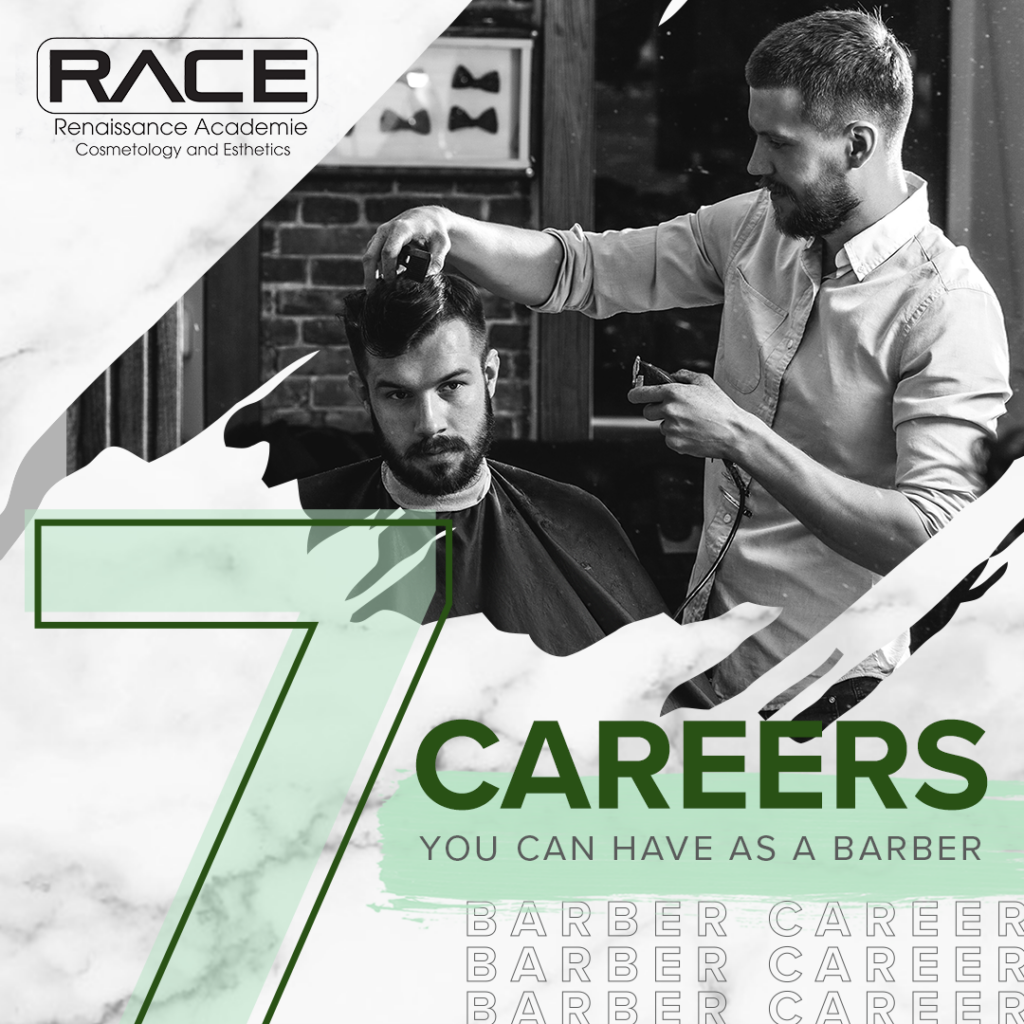
7 Barbering Career Paths to Explore in Utah
Last reviewed: August 2026
If you love precision haircutting, fades, clipper work, beard design, and working directly with clients, barbering skills can be part of several different career directions in the professional hair industry.
But if you are researching barber careers in Utah in 2026, there is an important licensing distinction to understand first.
Utah now offers a limited 130-hour Barbering Permit as well as broader professional hair licensing pathways. Renaissance Academie (RACE) does not offer or promote the permit-only Barbering pathway.
Instead, RACE offers a 1,000-hour Hair Design program that includes barbering and haircutting alongside color, blonding, chemical texture, styling, extensions, and other professional hair services.
For students who love barbering but want broader professional hair education, that additional training can create more options as interests and career goals evolve.
Here are seven barbering-related career paths to explore.
Before Choosing a Barbering Career Path, Understand Utah Licensing
Utah’s beauty-industry licensing structure changed in 2026.
The state’s 130-hour Barbering Permit covers a limited scope of barbering services such as haircutting, clipping, trimming, shampooing, scalp treatments, basic styling, blow drying, and facial or neck shaving.
Utah’s broader 1,000-hour Master Hair Design/Master Barbering licensing pathway includes haircutting and barbering plus chemical hair services such as coloring, bleaching, permanent waving, relaxing, and similar professional hair treatments.
RACE’s Hair Design program follows the broader 1,000-hour professional hair-education pathway.
The distinction matters because the career direction you eventually choose may involve more than the services allowed under a limited Barbering Permit.
1. Barbershop Hair Professional
The traditional barbershop remains one of the most recognizable environments for someone who loves barbering.
Professionals working in this setting may focus heavily on services such as fades, tapered cuts, clipper work, short hairstyles, beard design, and shaving.
The work is highly client-centered.
Strong professionals learn how to combine technical skill with consultation, communication, timing, sanitation, and consistent service experiences.
Some barbershop professionals specialize almost entirely in traditional barbering services, while others work in shops where broader hair services are offered.
Your specific credential and scope of practice determine which services you may legally perform.
2. Men’s Grooming Specialist
Some hair professionals build their careers around specialized men’s grooming.
This may include precision haircutting, fades, beard design, shaving, styling, grooming consultations, and product recommendations.
A professional who completes broader Hair Design education may also have training in areas such as hair color, gray blending, chemical texture, and other services that can expand a grooming menu.
This is one reason students should think carefully about what they may want to offer several years into their career—not only what they want to perform on their first day.
3. Salon Professional With a Barbering Focus
Barbering skills are not limited to traditional barbershops.
Hair professionals with strong cutting and barbering skills may also work in full-service salons.
A salon professional might spend much of the day performing:
- Fades and short cuts
- Precision scissor cutting
- Clipper services
- Beard design
- Styling
- Color
- Blonding
- Texture services
This is where broader Hair Design education can become especially valuable.
At RACE, students do not have to choose between learning barbering or learning professional hair services such as coloring and chemical texture.
The 1,000-hour Hair Design program includes both.
4. Independent Hair Professional or Studio Owner
Some experienced professionals eventually decide they want more independence.
Depending on licensing, business, facility, local, and other applicable requirements, that could mean working in a booth-rental environment, independent studio, salon suite, or eventually operating a business.
Running a beauty business involves much more than performing great haircuts.
Professionals may also need to understand:
client consultation, scheduling, rebooking, pricing, retail, sanitation, marketing, social media, budgeting, customer service, business licensing, insurance, taxes, and client retention.
RACE incorporates business and career education into Hair Design because technical ability is only one part of developing a professional career.
Owning or operating a shop may also involve additional business, facility, or licensing requirements beyond an individual professional license.
5. Film, Photography, Fashion, or Event Grooming Professional
Hair professionals may also pursue opportunities connected to photography, fashion, entertainment, weddings, events, or other creative productions.
Someone working in these environments may need skills such as:
- Precision cutting
- Styling
- Grooming
- Maintaining continuity between looks
- Working efficiently under time constraints
- Collaborating with makeup artists, photographers, stylists, and production teams
These opportunities can be competitive and may require experience, networking, a strong portfolio, and additional professional relationships.
When regulated beauty services are being performed, professionals must also hold whatever license or credential is required in the jurisdiction where the work occurs.
6. Product Educator, Brand Representative, or Platform Artist
Some experienced hair professionals eventually work with professional brands, product companies, tool manufacturers, or beauty distributors.
These roles may involve demonstrating products, teaching techniques, representing a brand at events, supporting salons, creating educational content, or presenting at industry shows.
Professional experience behind the chair can be valuable because product educators understand how tools, color, styling products, and professional systems are actually used with clients.
These careers often develop after someone has built technical skill, experience, communication ability, and industry relationships.
They are not guaranteed outcomes of beauty school, but they are examples of how professional hair education can eventually lead beyond traditional salon work.
7. Hair Educator or Instructor
Some professionals discover that they enjoy teaching as much as performing services.
An experienced hair professional may eventually explore opportunities in beauty education, technical training, product education, or school instruction.
Becoming a licensed beauty-school instructor is a separate professional step and may require additional education, experience, testing, or licensing requirements established by Utah.
Completing Hair Design school does not automatically make someone qualified to teach in a licensed school.
However, strong technical training can provide the professional foundation someone may later build upon if education becomes part of their career goals.
Can You Build a Barbering Career Through Hair Design?
Yes.
RACE’s current 1,000-hour Hair Design program includes substantial barbering education.
Students develop skills in areas such as precision haircutting, clipper techniques, tapered cuts and fades, shaving and beard design, hairstyling, coloring, blonding, permanent waving and relaxing, natural texture, extensions, client consultation, business skills, and licensing preparation.
That means a graduate may choose to specialize heavily in barbering while still having education in a broader range of professional hair services.
Your license does not dictate the exact specialty you must build your career around.
It establishes the professional scope within which you may practice.
Why RACE Does Not Offer the 130-Hour Barbering Permit
Utah’s 130-hour Barbering Permit can meet a very specific goal for someone who wants only the limited services included within that permit’s scope.
RACE has chosen a different educational direction.
We focus on comprehensive professional licensing pathways rather than permit-only training.
A student may begin school thinking:
“I only want to do fades.”
Later, that professional may become interested in gray blending, hair color, blonding, extensions, texture services, specialty cutting, or another area of professional hair.
Broader education gives students the opportunity to develop those skills before they need them.
It may also provide more education for another state to evaluate if a professional relocates later, although no Utah beauty credential is automatically transferable to another jurisdiction.
What Happens If You Move to Another State?
Beauty licenses and permits are regulated by individual states.
A Utah Barbering Permit does not automatically authorize you to practice in another state.
A Utah professional hair license does not automatically transfer either.
The destination state determines how it evaluates your education, credential, experience, examination history, and professional scope.
Another state may require additional education, testing, documentation, experience, or a different credential.
Students who know they may relocate should research the licensing requirements of states where they could eventually live before choosing a limited training pathway.
Hair Design vs. a Barbering Permit
For someone primarily interested in barbering, the difference can be summarized simply.
Utah’s 130-hour Barbering Permit is designed around a limited barbering scope.
RACE’s 1,000-hour Hair Design program provides comprehensive professional hair education that includes barbering along with color, blonding, chemical texture, styling, extensions, and other hair services.
Neither pathway should be chosen based only on the number of hours.
The better question is:
What do you want your professional options to look like after you finish?
Hair Design vs. Cosmetology for Someone Who Loves Barbering
RACE offers two current programs that include barbering education.
Hair Design — 1,000 hours
Hair Design focuses on all things hair, including cutting, barbering, color, blonding, chemical texture, styling, and extensions.
Cosmetology — 1,250 hours
Cosmetology includes extensive professional hair education and barbering plus broader training in areas such as skincare and nails.
If hair is clearly where your passion is, Hair Design may be the more focused option.
If you want hair plus broader beauty education, Cosmetology may be worth exploring.
What Should You Look for in Barbering Education?
Before choosing a program, consider more than the shortest training requirement.
Ask:
How much haircutting practice will I receive?
Will I learn both scissors and clippers?
Will I learn fades and tapered cuts?
Will I learn shaving and beard design?
Can I learn hair color and blonding?
Will I learn chemical texture?
Will I work with real clients?
How does the school prepare students for licensing?
What happens if I later want to expand my service menu?
What credential will I qualify for?
What happens if I eventually move outside Utah?
The answers can help you determine whether a limited Barbering Permit or broader professional hair education better matches your goals.
Frequently Asked Questions
Does RACE offer a Barbering program?
RACE does not currently offer a stand-alone 130-hour Barbering Permit program.
Students interested in barbering should explore RACE’s 1,000-hour Hair Design program or 1,250-hour Cosmetology program, both of which include barbering education.
Does Hair Design include barbering?
Yes.
RACE Hair Design includes professional education in haircutting, clipper work, tapered cuts and fades, shaving, beard design, styling, color, chemical texture, and other professional hair services.
How many hours is RACE Hair Design?
RACE’s current Hair Design program is 1,000 hours, including 650 hours of on-campus training and up to 350 hours of approved distance education.
How many hours is Utah’s Barbering Permit?
Utah’s school-based Barbering Permit requires a minimum of 130 hours of instruction.
Is the Barbering Permit the same as a professional Hair Design license?
No.
The Barbering Permit has a narrower scope.
Utah’s 1,000-hour Master Hair Design/Master Barbering licensing pathway includes barbering plus chemical hair services such as coloring, bleaching, permanent waving, and relaxing.
Can Hair Design graduates work in a barbershop?
The work environment available to a graduate depends on the professional credential obtained, the services being performed, employer requirements, and applicable Utah laws.
Hair Design education includes barbering skills and can support professionals who want barbering to be a major part of their career.
Can a barber own a barbershop?
Professional licensure and business ownership are separate issues.
Someone operating a shop may need to meet business, facility, insurance, tax, local, and other regulatory requirements in addition to holding the professional credential required for the services they perform.
Can a Utah barber credential automatically transfer to another state?
No.
Each state determines how it evaluates credentials issued elsewhere.
Explore Hair Design at Renaissance Academie
If you love fades, haircutting, barbering, color, blonding, texture, styling, and the creativity of professional hair, RACE’s 1,000-hour Hair Design program may be a strong path to explore.
Renaissance Academie’s Hair Design program combines:
650 hours of hands-on campus training
with
up to 350 hours of approved distance education.
Students build professional skills in a salon-learning environment while also receiving business education, career preparation, and support as they work toward applicable Utah licensing requirements.
Explore the Renaissance Academie Hair Design Program to see current curriculum, schedules, costs, Financial Aid information, start dates, and enrollment requirements.
You can also read our guides to Barbering Permit vs. Hair Design in Utah and How to Become a Barber in Utah for a deeper explanation of Utah’s 2026 licensing structure.
Or schedule a campus tour to visit RACE in Provo, explore the student salon and classrooms, meet the team, and talk through which professional hair pathway fits your goals.
Career opportunities vary by individual skill, licensing, experience, employer requirements, location, business setup, and other factors. Completion of a beauty-school program does not guarantee employment, income, business ownership, or a particular career outcome. Licensing requirements vary by jurisdiction and may change.