December 4, 2024
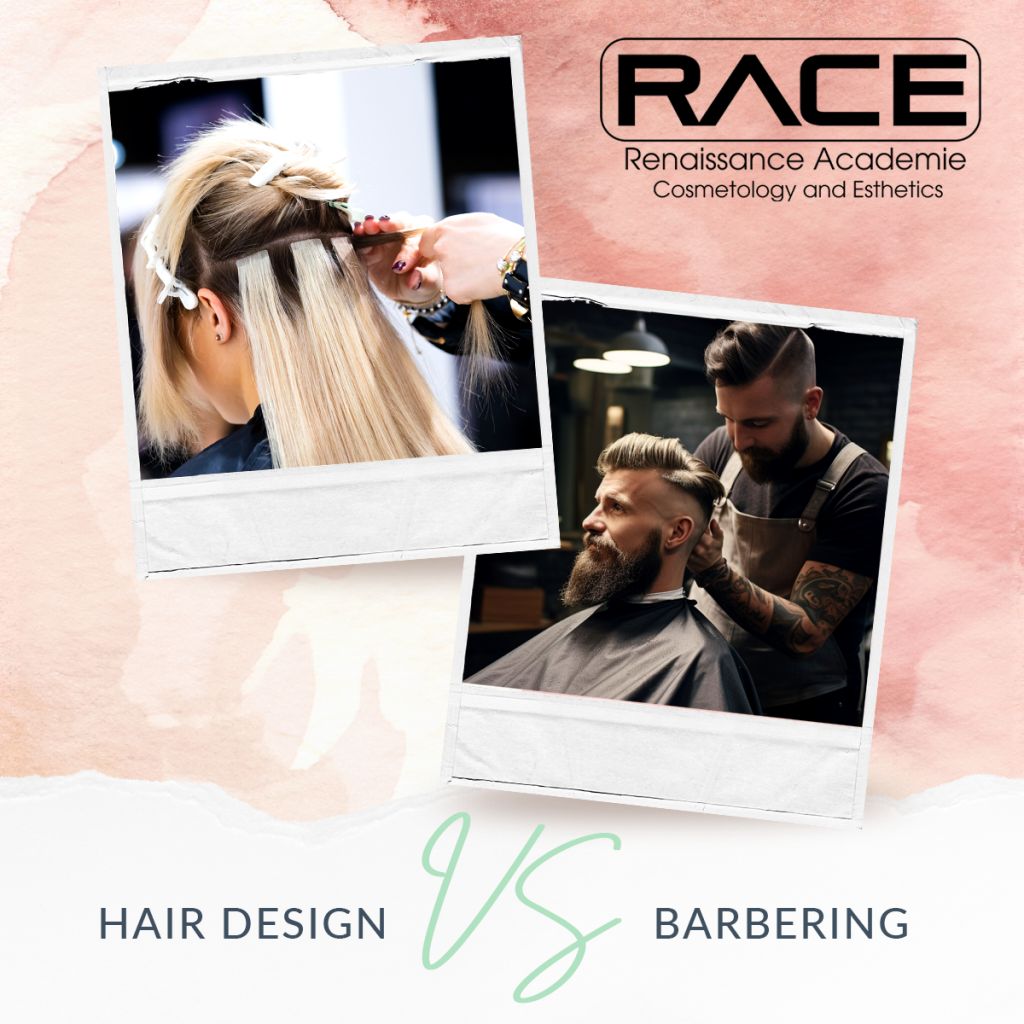
Barbering Permit vs. Hair Design in Utah: Why Licensing Matters
Last reviewed: August 2026
If you love fades, precision cutting, beard design, clipper work, and creating great hair, you may be wondering whether Utah’s Barbering Permit or a full Hair Design education is the better path.
That question became especially important after Utah changed its beauty-industry licensing structure in 2026.
Utah now offers a 130-hour Barbering Permit for a limited range of traditional barbering services. Utah also maintains a broader 1,000-hour Master Hair Design and Master Barbering licensure pathway that includes haircutting and barbering along with chemical hair services such as coloring, lightening, permanent waving, and relaxing.
At Renaissance Academie, we have made an intentional choice:
RACE does not offer or promote a permit-only barbering program.
Our Hair Design program is a 1,000-hour professional education pathway built for students who want comprehensive hair training, broader professional skills, and preparation for full licensure rather than a limited permit.
Here is why that distinction matters.
What Is Utah’s Barbering Permit?
Utah’s current Barbering Permit is a focused credential requiring a minimum of 130 hours of instruction through an eligible school pathway or completion of an approved apprenticeship.
The permit allows services within Utah’s defined barbering scope, including areas such as:
- Haircutting, clipping, and trimming
- Shampooing
- Scalp treatments
- Basic wet styling
- Blow drying
- Certain wig and hairpiece services
- Facial and neck shaving
- Limited head, neck, and shoulder massage when performed with barbering services
For someone who intends to perform only those specific services in Utah, the permit may meet that limited goal.
However, it is important to understand what the permit does not represent.
A Barbering Permit is not the same credential as completing a comprehensive professional Hair Design licensing program.
What Is Hair Design at RACE?
Renaissance Academie’s Hair Design program is 1,000 hours and focuses on comprehensive professional hair education.
Students develop skills in areas such as:
- Precision haircutting
- Clipper cutting
- Tapered cuts and fades
- Shaving and beard design
- Hair coloring
- Blonding and lightening
- Chemical texture
- Permanent waving and relaxing
- Natural texture
- Thermal styling
- Wet styling
- Hair and scalp treatments
- Wigs and hairpieces
- Hair extensions
- Client consultation
- Sanitation and safety
- Business and career development
- State licensing preparation
RACE’s current Hair Design program includes both hands-on campus education and approved distance education.
The result is a much broader education than a permit-only barbering course.
Permit vs. License: Why Does the Difference Matter?
The words permit and license can sound interchangeable, but they are not the same thing.
A permit authorizes a person to perform the specific services included within that permit’s scope.
A professional license generally represents completion of a broader education and qualification pathway associated with a larger scope of professional practice.
That distinction becomes important when you start thinking beyond simply:
“What is the minimum I need to legally work?”
A better long-term question may be:
“What do I want to be able to do throughout my career?”
What Can Hair Design Include That the Barbering Permit Does Not?
One of the biggest differences is chemical hair services.
Utah’s 1,000-hour Master Hair Design/Master Barbering pathway includes education in:
- Haircutting and barbering
- Hair safety
- Chemical hair services
The professional scope includes services such as:
- Hair coloring
- Bleaching and lightening
- Permanent waving
- Relaxing
- Other chemical treatments
- Hair extensions and fusing
- Styling
- Haircutting
- Barbering
- Shaving
Those services can dramatically expand the type of clients and professional opportunities available to someone working in hair.
A person may begin their career loving fades and barbering and later discover a passion for blonding, dimensional color, extensions, texture, or another specialty.
Broader education gives students room to discover those interests.
Why RACE Focuses on Licensure, Not Permits
At Renaissance Academie, our educational philosophy is centered on preparing students for professional licensure and long-term career flexibility.
For that reason, RACE does not currently offer the 130-hour Barbering Permit program.
We believe students considering professional hair education should understand the difference between meeting a minimum permit requirement and investing in a comprehensive education that develops a wider range of professional skills.
Our 1,000-hour Hair Design program gives students the opportunity to learn:
- Traditional barbering skills
- Precision cutting
- Fades and clipper work
- Shaving and beard design
- Hair coloring
- Blonding
- Chemical texture
- Styling
- Extensions
- Professional client consultation
- Business development
- State licensing preparation
The goal is not simply to teach enough to perform one narrow group of services.
The goal is to help students build a professional foundation they can continue using as their career evolves.
What Happens If You Move to Another State?
This is another important consideration when comparing a permit with a professional licensing pathway.
Beauty-industry regulation is controlled by individual states.
That means a Utah Barbering Permit does not automatically give you legal authority to perform barbering services in another state.
If you move, the state where you want to work determines:
- Whether it recognizes your existing credential
- Whether your education is considered equivalent
- Whether additional training hours are required
- Whether examinations are required
- Whether you must obtain a different license or credential
The same principle applies to professional licenses: no Utah beauty license is automatically guaranteed to transfer everywhere.
However, students thinking about the possibility of moving should carefully consider the amount of education and scope represented by the credential they earn.
A comprehensive professional licensing pathway gives another state a broader education and professional credential to evaluate than a limited Utah permit.
If working outside Utah could ever be part of your future, research the licensing requirements of states where you may eventually live before choosing a minimum permit pathway.
Is a Utah Beauty Credential Automatically Valid in Every State?
No.
Beauty licenses and permits are issued by individual states.
A credential issued in Utah allows practice according to Utah law. Another state has its own rules regarding endorsement, reciprocity, equivalency, examinations, education hours, and scope of practice.
For example, another state may:
- Recognize an equivalent professional license
- Require documentation of completed school hours
- Require proof of work experience
- Require additional education
- Require a state-specific examination
- Have no equivalent credential for a Utah permit
Students should never assume that completing the minimum requirement in one state guarantees eligibility to practice everywhere else.
Professional mobility is another reason RACE encourages students to think beyond the shortest possible training pathway.
What If You Know You Only Want to Barber?
Loving barbering does not necessarily mean you need to limit your education to a barbering permit.
RACE Hair Design students learn barbering techniques such as:
- Fades
- Tapered cuts
- Clipper cutting
- Precision haircutting
- Beard design
- Shaving
But they also gain education in color, blonding, chemical texture, styling, and other professional hair services.
That means you can still build a career primarily around barbering while having additional professional skills available if your interests or clientele change later.
You may enter school thinking:
“I only want to cut hair.”
Five years later, you may decide you want to add:
- Gray blending
- Hair color
- Blonding
- Perms
- Texture services
- Extensions
- Additional styling services
Education can create options you may not know you want yet.
Does Hair Design Mean You Cannot Work in a Barbershop?
No.
Hair Design education includes barbering and haircutting skills.
The type of environment where a graduate ultimately works depends on licensing, employer requirements, individual skill, career goals, and the services they choose to specialize in.
A Hair Design graduate may be interested in environments such as:
- Barbershops
- Hair salons
- Specialty haircutting salons
- Color salons
- Independent studios
- Booth-rental environments where permitted
- Men’s grooming environments
- Specialty texture or extension businesses
Your education does not dictate one single career setting.
It gives you skills you can choose how to use.
Who Might Consider the Barbering Permit?
The Utah Barbering Permit may make sense for someone whose goals are extremely specific.
For example, someone may know that:
- They intend to remain in Utah
- They only want to perform services allowed under the Barbering Permit
- They are not interested in color or chemical hair services
- They understand the permit’s limited scope
- They understand another state may not recognize the credential in the same way
- They specifically want the minimum training pathway for those services
RACE respects that different people have different goals.
However, RACE does not offer this permit pathway because it does not align with the broader professional education model we want to provide our students.
Who Is Hair Design Best For?
RACE Hair Design may be a stronger fit if you:
- Love all things hair
- Want barbering and haircutting skills
- Want to learn hair color
- Are interested in blonding
- Want chemical texture education
- Enjoy styling
- Want broader professional flexibility
- May move to another state someday
- Want a comprehensive professional education
- Want preparation for a full Utah licensing pathway
A simple way to think about it is:
The Barbering Permit teaches toward a limited barbering scope.
Hair Design prepares students for a broader professional hair career.
Barbering Permit vs. Hair Design: The Quick Comparison
Utah Barbering Permit
Training requirement: 130 hours
Primary focus: Limited barbering services
May include:
- Haircutting
- Clippers
- Basic styling
- Shampooing
- Shaving
Does not provide the same chemical-hair-service scope as the full Hair Design/Master Barbering licensing pathway.
RACE does not offer this program.
RACE Hair Design
Program length: 1,000 hours
Primary focus: Comprehensive professional hair education
Includes education in:
- Barbering
- Haircutting
- Fades
- Shaving
- Styling
- Hair coloring
- Blonding
- Chemical texture
- Extensions
- Client consultation
- Career development
- State licensing preparation
Designed to prepare graduates for the applicable professional Utah licensing pathway.
Why Would Someone Complete 1,000 Hours Instead of 130?
This may be the most important question prospective students should ask.
If Utah legally offers a 130-hour permit, why spend considerably more time in school?
Because the two pathways are designed for different professional goals.
The 130-hour permit is designed around a limited barbering scope.
The 1,000-hour Hair Design pathway is designed around comprehensive professional hair education.
Those additional hours provide time to learn and practice:
- Color formulation
- Hair lightening
- Chemical texture
- Advanced haircutting
- Styling
- Barbering
- Client consultation
- Professional service timing
- Hands-on services
- Career preparation
- State licensing readiness
There is nothing wrong with understanding the shortest legal pathway.
But students should also understand what they may be giving up in exchange for that shorter training period.
Questions to Ask Before Choosing a Permit Program
Before choosing a permit-only program anywhere, ask:
What services will I legally be able to perform?
Understand the exact scope.
What services will I NOT be able to perform?
This may matter even more.
What happens if I decide I want to offer color later?
Find out what additional education or licensing would be required.
What happens if I move out of Utah?
Contact the licensing board in the state where you may move and ask whether the Utah credential would be recognized.
Will employers I am interested in require broader licensure?
Different salons and barbershops may have different expectations.
What education am I receiving beyond the minimum legal requirement?
Compare curriculum—not simply program length.
Where do I want my career to be five years from now?
The shortest educational path today may not always create the most flexibility tomorrow.
Frequently Asked Questions
How many hours is Utah’s Barbering Permit?
Utah’s school-based Barbering Permit pathway requires a minimum of 130 hours of instruction.
How many hours is RACE Hair Design?
Renaissance Academie’s Hair Design program is 1,000 hours.
Does RACE offer the 130-hour Barbering Permit?
No. Renaissance Academie does not currently offer or promote the permit-only Barbering pathway. RACE focuses its professional hair education on its comprehensive 1,000-hour Hair Design program and full professional licensure preparation.
Can Hair Design students learn barbering?
Yes. RACE Hair Design education includes haircutting, clipper work, fades, shaving, beard design, and other barbering skills.
Does Hair Design include hair color?
Yes. The professional Hair Design licensing pathway includes chemical hair services, and RACE Hair Design students receive education in areas including hair color, blonding, and chemical texture.
Can I use a Utah Barbering Permit in another state?
A Utah permit does not automatically authorize practice in another state. Each state establishes its own licensing laws and decides how or whether it recognizes credentials earned elsewhere. Contact the destination state’s licensing authority for individual requirements.
Is a Utah professional hair license automatically transferable?
No professional license should be assumed to transfer automatically. States evaluate out-of-state credentials under their own endorsement, reciprocity, equivalency, examination, and education requirements.
What if I want to work primarily as a barber?
You can still build your professional focus around barbering after comprehensive Hair Design education. The difference is that you also have education in additional professional hair services available as your career develops.
Explore Hair Design at Renaissance Academie
If all things hair are your passion, RACE’s 1,000-hour Hair Design program gives you the opportunity to develop cutting, barbering, color, blonding, styling, chemical texture, and professional client-service skills through comprehensive beauty education.
Renaissance Academie is located in Provo, Utah and offers hands-on training, supervised client experience, flexible scheduling, approved distance education, business and career preparation, and support as students prepare for applicable Utah licensing requirements.
Explore the Renaissance Academie Hair Design Program to see current curriculum, schedules, tuition and costs, start dates, Financial Aid information, and enrollment requirements.
Or schedule a campus tour to visit RACE, see our student salon and classrooms, meet the team, and talk through whether Hair Design is the right professional path for you.
Professional licensing and permit requirements vary by state and may change. A Utah license or permit does not automatically authorize practice in another jurisdiction. Students and professionals should verify current requirements with the licensing authority in any state where they plan to practice.